
Facial Balance Surgery with Orthognathic Surgery Double Jaw Correction

A balanced face is not defined by perfect symmetry. Every face has natural differences between the right and left sides. Facial imbalance becomes a concern when jaw position, bite alignment, chin shape, or facial proportions affect appearance, chewing, speech, breathing, or confidence.
Orthognathic surgery, also called corrective jaw surgery, is designed to reposition the upper jaw, lower jaw, or both. When carefully planned, it can improve facial asymmetry, jaw asymmetry, bite function, and overall facial harmony. For some patients, treatment also includes genioplasty, a chin procedure that refines the lower face without changing the teeth.
This article explains how facial balance surgery with jaw correction works, what double jaw surgery involves, and what patients can realistically expect from planning, recovery, and soft-tissue adaptation. This content is educational and does not replace a personal consultation with a qualified oral and maxillofacial surgeon or orthodontist.
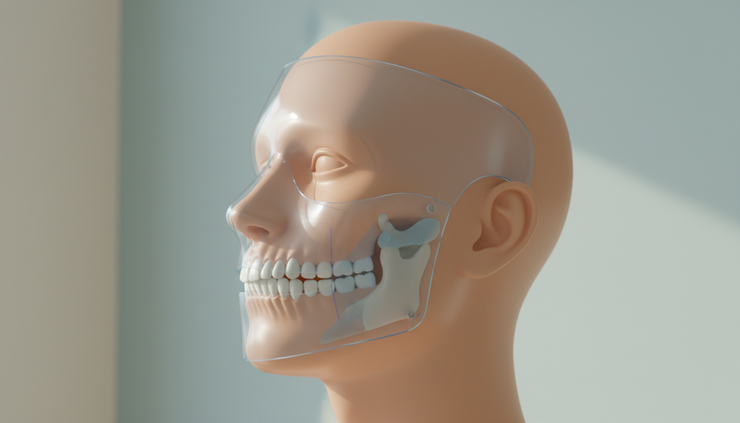
What facial imbalance can mean
Facial imbalance can come from bone structure, tooth position, soft-tissue thickness, muscle tone, or a mix of these factors. In jaw-related cases, the cause often sits in the relationship between the maxilla, mandible, and chin.
Common patterns include:
A lower jaw that sits too far back or too far forward
An upper jaw that is narrow, long, short, recessed, or tilted
A chin that looks weak, prominent, long, short, or off-center
A smile that shows too much gum or too little upper tooth display
A bite that does not meet evenly
A face that appears longer, shorter, flatter, or more asymmetric than expected
Facial asymmetry surgery may be considered when one side of the jaw grows differently from the other, when the chin point shifts to one side, or when the bite plane is slanted. The goal is improvement in balance and function, not artificial or absolute symmetry.
Why jaw position affects the whole face
The jaws act like the frame of the lower and middle thirds of the face. A small change in jaw position can influence:
Lip support
Cheek projection
Chin position
Neck and jawline contour
Nasal base support
Smile line
Tooth display
Facial proportions from the front and side
For example, a recessed upper jaw can make the midface look flatter and may affect how the upper lip rests. A lower jaw that is too far back can reduce chin definition and make the lower face look shorter or less supported. A lower jaw that is too far forward can create a strong underbite appearance and change the way the lips close.
This is why corrective jaw surgery is not only about the bite. It is also about how the skeleton supports the visible soft tissues.
How orthognathic surgery improves facial balance
Orthognathic surgery repositions facial bones into a more functional and balanced relationship. Treatment usually combines orthodontics and surgery. The orthodontic phase aligns the teeth so the jaws can be placed correctly during surgery. The surgical phase moves the jaw bones. After surgery, orthodontic finishing may refine the bite.
The exact plan depends on the diagnosis. Some patients need upper jaw surgery only. Others need lower jaw surgery only. Many patients with more complex facial imbalance benefit from double jaw surgery.
Correcting the upper jaw with Le Fort I osteotomy
A Le Fort I osteotomy is the standard procedure used to reposition the upper jaw. Through incisions inside the mouth, the surgeon mobilizes the maxilla and moves it according to the surgical plan.
The upper jaw may be moved:
Forward to improve midface and dental support
Upward to reduce excessive gum display
Downward in selected cases to improve tooth show
Rotated to correct a tilted smile or occlusal plane
Widened in specific treatment plans, sometimes with additional techniques
Upper jaw position can strongly affect facial proportions. It influences how the upper lip is supported, how the teeth show when smiling, and how the lower jaw should meet the bite.
Correcting the lower jaw with BSSO
A bilateral sagittal split osteotomy, often called BSSO, is commonly used to move the lower jaw. The mandible can be advanced, set back, rotated, or centered depending on the bite and facial plan.
BSSO may help with:
Underbite correction
Recessed lower jaw correction
Jaw asymmetry
Chin deviation caused by mandibular position
Bite imbalance between the right and left sides
In many cases, a lower jaw movement also changes the appearance of the chin and jawline. For this reason, surgeons evaluate the mandible and chin together rather than treating them as separate cosmetic zones.

When double jaw surgery is used
Double jaw surgery means both the upper jaw and lower jaw are repositioned during the same surgical treatment. It may be recommended when moving only one jaw would not create the best bite, facial balance, or airway relationship.
A double jaw plan may be used for:
Significant overbite or underbite
Open bite
Facial asymmetry with a tilted bite plane
Long-face or short-face patterns
Jaw asymmetry involving both jaws
Combined midface and lower-face imbalance
Cases where airway and bite goals need coordinated planning
Because both jaws influence each other, moving them together can allow more controlled correction. For example, rotating the upper jaw can change the way the lower jaw fits. Advancing both jaws in selected patients may improve skeletal support while also addressing bite and airway considerations.
This is where the term Facial Balance Surgery with Orthognathic Surgery Double Jaw Correction becomes meaningful. The procedure is not simply about moving bones. It is about planning the jaws, teeth, chin, lips, and airway as connected parts of one face.
Genioplasty and chin refinement
Genioplasty is surgery on the chin bone. It can move the chin forward, backward, upward, downward, or slightly to one side. It may be performed with orthognathic surgery or as a separate procedure.
Genioplasty can help when the bite correction is good, but the chin still needs refinement for better facial harmony. For example:
A chin may remain slightly recessed after jaw alignment
A chin may be vertically long or short
The chin point may need centering
The lower face may need better proportion without changing the bite
Unlike a chin implant, sliding genioplasty repositions the patient’s own bone. The best choice depends on anatomy, goals, soft tissues, and surgeon recommendation.
Planning facial asymmetry surgery with 3D tools
Modern jaw surgery planning often uses cone beam CT imaging, digital dental scans, facial photographs, and bite analysis. These tools allow the surgical team to study the skeleton and teeth from multiple angles.
3D surgical planning helps surgeons simulate jaw movements before the operation. It can support more precise planning for:
Upper jaw level and rotation
Lower jaw centering
Chin position
Bite fit
Facial midline
Occlusal plane cant correction
Airway space evaluation
Custom surgical splints or guides in selected cases
Virtual planning does not remove the need for surgical judgment. It helps the team see the problem clearly and plan the sequence of correction. In facial asymmetry surgery, this is especially helpful because the issue may involve several planes at once, including left-right shift, vertical tilt, and front-back imbalance.
Bite and airway considerations
A stable bite is one of the main goals of orthognathic surgery. The teeth need to meet in a way that supports chewing, jaw joint comfort, and long-term stability. This is why orthodontic preparation is often part of treatment.
Airway evaluation may also be part of planning. Jaw position can affect the space behind the tongue and soft palate. In selected patients, advancing the jaws can increase airway dimensions. This does not mean jaw surgery is automatically a cure for breathing problems or sleep apnea. Airway outcomes depend on anatomy, diagnosis, weight, soft-tissue behavior, and other health factors.
A careful plan weighs both appearance and function. A jaw position that looks good but creates an unstable bite is not a good result. A bite correction that ignores the face may also feel incomplete. The best plans balance both.

What recovery and soft-tissue adaptation involve
Recovery after corrective jaw surgery happens in stages. Swelling is expected and is usually most noticeable early on. Bruising, tightness, temporary numbness, nasal stuffiness after upper jaw surgery, and changes in chewing are also common experiences.
Most patients follow a modified diet during the early healing period. The surgical team may recommend liquids and soft foods at first, then gradual return to more normal textures. Oral hygiene, medication instructions, and follow-up visits are important parts of recovery.
General recovery themes include:
Swelling improves gradually over weeks and continues to refine over months
Numbness can take time to improve, especially in lower jaw surgery
Energy levels may be lower during early healing
Orthodontic adjustments may continue after surgery
Final facial refinement takes time as tissues settle
The face does not show the final outcome immediately. Soft tissues, including lips, cheeks, skin, muscles, and the chin pad, need time to adapt to the new bone position. Some changes appear quickly as swelling decreases. More subtle definition may continue to develop over several months.
Why soft tissues matter
Bone movement creates the foundation, but soft tissue determines much of what is visible. Two patients with similar jaw movements may look different after surgery because of skin thickness, muscle tone, lip shape, age, and healing response.
This is why surgeons avoid promising perfect symmetry. The aim is a more balanced and functional relationship, with realistic improvement in facial proportions and jaw position. Small natural differences often remain, and that is normal.
Choosing the right treatment plan
A strong treatment plan starts with diagnosis, not a standard procedure. The surgeon and orthodontist evaluate facial proportions, bite, jaw joints, airway, teeth, gums, photographs, scans, and personal goals.
Patients researching orthognathic surgery in Istanbul, the United States, or elsewhere should look for a team that explains both the aesthetic and functional sides of treatment. The consultation should include clear discussion of risks, recovery, orthodontic needs, and expected limits.
Useful questions to ask include:
Which jaw or jaws need correction in my case?
Is double jaw surgery necessary, or would single jaw surgery be enough?
Would genioplasty improve the final facial balance?
How will the plan address my bite and facial asymmetry?
Will 3D virtual planning be used?
What changes are realistic for my soft tissues?
What are the main risks in my case?
How long will orthodontic treatment and recovery take?
A clear answer should connect the proposed movements to both function and appearance. If the explanation focuses only on looks or only on the bite, the plan may be incomplete.

The takeaway on facial harmony and jaw correction
Facial balance surgery through orthognathic treatment can improve the relationship between the upper jaw, lower jaw, chin, bite, and soft tissues. For the right patient, it may help correct jaw asymmetry, improve facial proportions, support better bite function, and create a more harmonious facial appearance.
The most natural-looking results come from careful diagnosis and realistic planning. Le Fort I upper jaw surgery, BSSO lower jaw surgery, double jaw surgery, genioplasty, and 3D surgical planning are tools. The key is choosing the right combination for the individual face.
Perfect symmetry is not the goal. A healthier bite, better support, improved balance, and a face that feels more in proportion are the outcomes worth planning for.



Comments