
Double Chin vs Recessed Jaw: Causes and Treatment Options

A double chin is often blamed on weight gain, but the story is not always that simple. The fullness under the chin, called the submental area, can come from fat, loose skin, facial bone structure, or a combination of all three. In some people, a recessed jaw or small lower jaw makes the neck look less defined even when body weight is normal.
Understanding the difference matters. Liposuction, skin tightening, chin surgery, and jaw surgery all address different causes. The right treatment starts with identifying whether the concern is mainly soft tissue, skeletal structure, or both.
This article is for general education only. A personal examination with a qualified jaw surgeon or facial specialist is needed before any diagnosis or treatment plan.
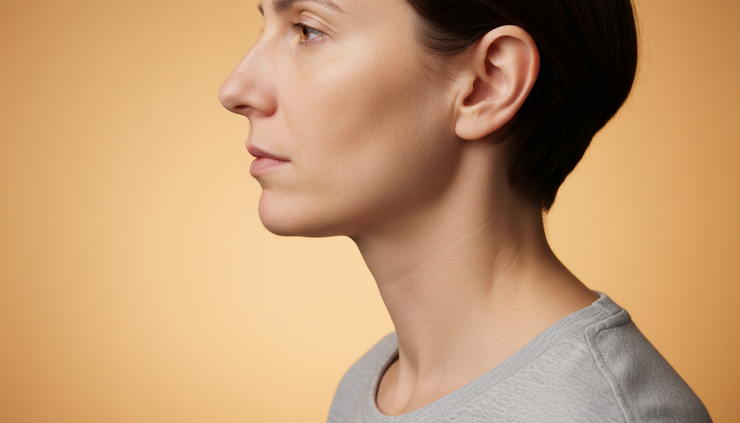
What causes a double chin?
A double chin develops when the area below the chin appears full or rounded. This can happen for several reasons, and more than one factor may be present at the same time.
Common contributors include:
Submental fat
Fat can collect under the chin just as it can in other areas of the body. Some people store fat in this region more easily, even with only mild weight changes.
Genetics
Family traits strongly influence facial shape, fat distribution, skin thickness, and jaw projection. A person can inherit a tendency toward a fuller neck or a smaller chin.
Skin laxity
Loose skin can make the area under the chin sag or fold. This may happen after weight loss, with aging, or because of natural skin quality.
Aging
Over time, skin loses elasticity, soft tissues descend, and the border between the jaw and neck can become less sharp. Muscle tone in the neck may also change.
Facial anatomy
The position of the chin, lower jaw, hyoid bone, and neck structures affects how the submental area looks. A small or retruded lower jaw can make soft tissue under the chin look more prominent.
This is why two people with the same amount of submental fat can have very different profiles. One may have a strong jawline that supports the soft tissue well. Another may have a small mandible, giving the neck a shorter or more convex appearance.
Why a double chin is not always caused by excess weight
Many patients feel frustrated because they eat well, exercise, and maintain a stable weight, yet still see fullness under the chin. This is common.
The submental area is shaped by both volume and support. Fat and skin create volume. Bone structure provides support and projection. If the lower jaw or chin sits farther back, the soft tissue under the chin has less forward support. That can make the area look heavier than it really is.
A person with a normal body mass can still have:
A naturally small chin
A short lower jaw
Mandibular retrusion
Loose skin after weight loss
A family tendency toward submental fullness
A low or soft jawline angle
In these cases, treating the area as a weight problem alone may lead to disappointment. The visible concern may be related more to anatomy than to lifestyle.

How a recessed jaw affects the chin and neck
A recessed lower jaw means the mandible sits farther back than ideal in relation to the upper jaw and the rest of the face. The medical term mandibular retrusion describes this backward position of the lower jaw.
When the mandible is retruded or small, several profile changes may appear:
The chin looks weak or set back
The jawline looks less defined
The neck appears fuller
The angle between the chin and neck looks softer
The lower face may look short or imbalanced
The lips and bite may not meet in an ideal relationship
A recessed jaw can also change how light and shadow fall across the lower face. A strong chin and well-positioned mandible create a clearer transition from face to neck. When the chin sits back, the same amount of submental tissue may cast a shadow or fold, making the area look like a double chin.
This relationship explains why some patients say, “I don’t have much fat under my chin, but my profile still looks full.” In those cases, the main issue may be projection rather than volume.
Is It a Double Chin or a Recessed Jaw?
A useful first question is whether the concern comes mainly from soft tissue, bone position, or both.
Signs that the issue may be mostly soft tissue include:
Pinchable fullness under the chin
Good chin projection from the side
A normal bite
A well-defined lower jaw when the neck is stretched
Skin looseness after aging or weight loss
Signs that a recessed jaw may contribute include:
A chin that sits behind the lower lip or facial profile line
A small or short lower jaw
A deep bite, overjet, or bite imbalance
Strain when closing the lips
A neck that looks full despite little pinchable fat
A facial profile that appears convex
These are only general clues. A true diagnosis requires an examination. The same patient may have a mild skeletal deficiency plus submental fat or skin laxity. In that situation, treatment planning needs to address the dominant cause and the patient’s goals.

How surgeons evaluate the cause
At Dilaver Jaw Surgery, evaluation of a double chin or recessed jaw concern is not based on one photograph. A careful assessment looks at the face, bite, airway-related anatomy when relevant, and the balance of soft tissue and bone.
A complete evaluation may include:
Facial examination
The surgeon assesses chin projection, jawline definition, neck angle, soft-tissue thickness, skin quality, and facial symmetry. The face is viewed from the front, side, and three-quarter angles.
Bite assessment
The way the upper and lower teeth meet gives important information about jaw position. A recessed mandible may be linked with bite findings such as increased overjet or a Class II jaw relationship.
Photographs
Standardized facial photographs help compare proportions and plan treatment. Side-profile photos are especially useful for studying the relationship between the forehead, nose, lips, chin, and neck.
3D imaging
Three-dimensional imaging can show the position and size of the jaws more clearly than surface photos alone. It helps identify whether the mandible is retruded, whether the chin bone is small, and how jaw movement might affect facial balance.
The goal is not to recommend the most aggressive treatment. The goal is to understand what is causing the appearance, then match treatment to that cause.
Treatment options depend on the underlying problem
Treatment for a double chin should be individualized. Some patients need only soft-tissue treatment. Others may benefit from chin repositioning or jaw correction. Many do not need jaw surgery at all.
When soft-tissue treatment may be enough
If the chin and jaw are well positioned and the main issue is fat under the chin, options such as submental liposuction may improve contour. If loose skin is the main concern, skin tightening procedures or lifting techniques may be discussed.
These treatments work best when the underlying jaw support is adequate. If the mandible is significantly recessed, removing fat alone may sharpen the neck somewhat but still leave the profile looking retruded.
When genioplasty may improve chin projection
Genioplasty is surgery that changes the position or shape of the chin bone. It may be considered when the chin itself is small or set back, but the dental bite and jaw relationship do not require full jaw movement.
In a sliding genioplasty, the surgeon moves the chin portion of the mandible forward, vertically, or in another planned direction. This can improve chin projection and the chin-neck transition. It may also create better facial balance without changing how the teeth fit together.
Genioplasty is not the same as mandibular advancement. It changes the chin segment, not the entire lower jaw.
When mandibular advancement or orthognathic surgery may be considered
If the lower jaw is recessed and the bite is also affected, mandibular advancement may be considered. This is a form of orthognathic surgery, meaning jaw surgery that corrects skeletal jaw position and bite relationship.
Orthognathic surgery may be discussed when there is:
Significant mandibular retrusion
A bite problem linked to jaw position
Facial imbalance caused by jaw deficiency
Functional concerns, such as chewing difficulty or lip strain
Airway or sleep-related concerns that require specialist evaluation
Moving the lower jaw forward can improve the relationship between the jaws, increase lower facial support, and change the neck contour. It is a larger procedure than genioplasty or liposuction, so it requires detailed planning, orthodontic coordination in many cases, and a clear medical reason.

Why aesthetic procedures alone may not solve the problem
Liposuction and other cosmetic treatments can be effective in the right patient. The concern is using them when the main issue is skeletal support.
For example, if a patient has a recessed lower jaw and minimal submental fat, liposuction may remove a small amount of tissue but cannot bring the chin or mandible forward. The neck may look slightly cleaner, yet the profile may still lack projection. In some cases, removing too much fat can even make skin laxity or jaw deficiency more noticeable.
This does not mean jaw surgery is always needed. It means the treatment should match the diagnosis. A soft-tissue problem calls for soft-tissue treatment. A chin deficiency may call for genioplasty. A true jaw deficiency with bite involvement may call for orthognathic planning.
The best results usually come from identifying the main cause before choosing a procedure.
The chin, jaw, neck, and profile work as one unit
The lower face cannot be assessed in isolation. The chin influences the jawline. The mandible supports the lower facial soft tissues. The neck contour affects how strong or soft the profile appears.
A balanced profile depends on several relationships:
Chin projection relative to the lips and nose
Mandibular position relative to the upper jaw
Soft-tissue volume under the chin
Skin elasticity along the neck
The angle between the jawline and neck
Dental bite and lower facial height
This is why a surgeon-led evaluation is valuable. A patient may come in asking about a double chin, but the examination may reveal a small chin, a recessed jaw, skin laxity, or a combination. Each finding changes the treatment plan.
Key takeaway
A double chin can result from fat, genetics, aging, skin laxity, facial anatomy, or skeletal jaw position. It is not always a sign of excess weight. In some patients, a recessed jaw or small mandible reduces chin and jawline projection, making the submental area look more prominent.
The right treatment may be as simple as soft-tissue contouring, or it may involve genioplasty or orthognathic surgery when the chin or jaw position is the true cause. A detailed facial examination, bite assessment, photographs, and 3D imaging can help identify the difference and guide a safe, realistic plan.



Comments