
Diet After Jaw Surgery First Week Meal Guide for Healing and Recovery

The first week after jaw surgery can make even simple meals feel complicated. Your mouth may be swollen, your bite may feel unfamiliar, and chewing is usually limited or completely off the table. That does not mean you should live on broth alone.
A good diet after jaw surgery supports bone healing, soft-tissue repair, energy, and comfort. During the first week after orthognathic surgery or double jaw surgery, the goal is simple: get enough fluids, calories, and protein in a way that does not require chewing.
This guide explains what to eat after jaw surgery in the first week, how to make liquid meals more nourishing, what to avoid, and how to prepare for the gradual move from liquids to puréed and soft foods.
This article is for general education only. Your surgeon’s instructions should always guide your exact diet, especially if you have elastics, a splint, bone grafting, or other specific surgical needs.
Why chewing is limited after jaw surgery
Jaw surgery changes the position of the upper jaw, lower jaw, or both. The bones are held in their new position with small plates, screws, or wires while healing begins. Even though the fixation is strong, the jaw still needs time to recover.
Chewing too early can create extra movement and pressure. It may also increase pain, swelling, or strain around the surgical sites. In the first week, many patients also have:
Facial swelling
Numbness or tingling
Limited mouth opening
Tender incision areas
A splint or elastics guiding the bite
Difficulty moving food around the mouth
For these reasons, most surgeons recommend a liquid diet after jaw surgery at first. Some patients can sip from a cup. Others need a syringe, squeeze bottle, or small spoon depending on swelling, elastics, and comfort.
The key is to choose foods that are smooth, thin enough to swallow safely, and nourishing enough to support recovery.
What to eat and drink during the first week
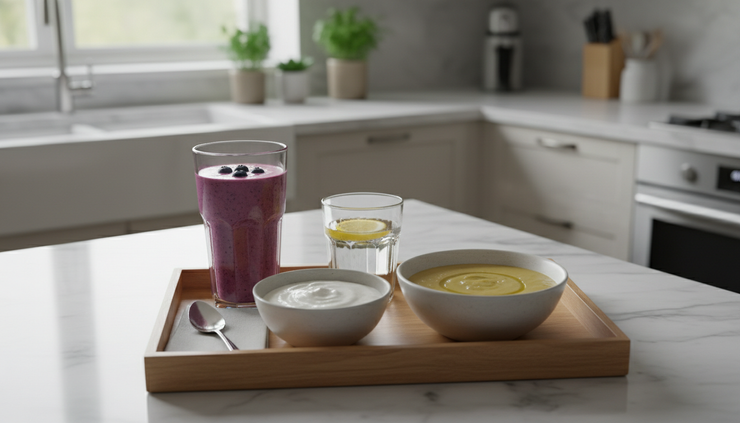
Think of the first week as a no-chew phase. Food should be drinkable or very smooth. If it needs to be chewed, it is too early unless your surgeon specifically says otherwise.
Good first-week options include:
Smooth protein shakes
Milk or fortified milk alternatives
Kefir
Drinkable yogurt
Greek yogurt thinned with milk
Smoothies without seeds or chunks
Creamy blended soups
Bone broth or regular broth with added protein
Meal replacement drinks
Applesauce thinned until smooth
Pudding or custard thinned if needed
Smooth oatmeal blended with milk
Mashed potatoes blended with broth or milk until pourable
Cream of wheat thinned to a drinkable texture
Smooth hummus thinned with broth or yogurt
Ice pops made from smoothies or oral rehydration drinks
A liquid diet does not mean eating only soup. Soup can be helpful, but many soups are low in protein and calories unless you add ingredients. A cup of plain broth may feel comforting, but it is not enough to fuel healing.
Try to build each “meal” with three parts:
Protein
Calories
Fluid
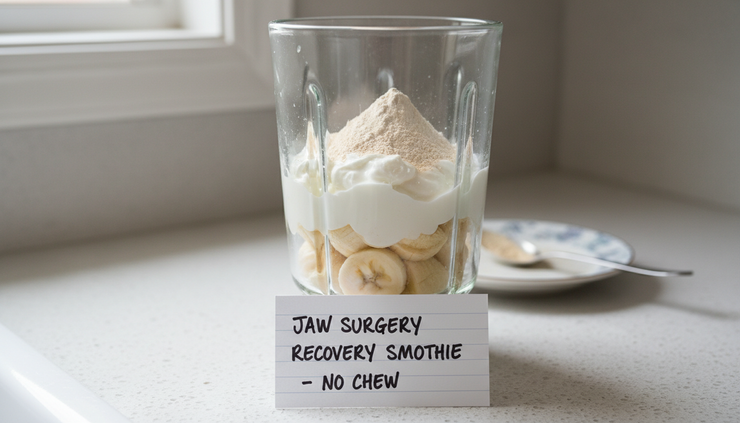
For example, a smoothie made with Greek yogurt, milk, banana, peanut butter, and protein powder gives far more support than juice alone.
Protein helps bone and soft-tissue healing
Protein is one of the most important nutrients during double jaw surgery recovery. Your body uses it to repair tissue, support immune function, and build the foundation for healing.
Many patients eat less after surgery because they feel full quickly, get tired of liquid foods, or worry about bothering their jaw. This can make protein intake drop fast.
Protein-rich liquid options include:
Food or drink | How to make it easier during week one |
Greek yogurt | Thin with milk, kefir, or a smooth fruit purée |
Kefir | Choose plain or low-sugar versions if tolerated |
Protein powder | Blend into smoothies, milk, or oatmeal |
Fairlife-style high-protein milk or similar drinks | Sip cold if swelling makes cool foods feel better |
Meal replacement shakes | Use when appetite is low or cooking feels hard |
Silken tofu | Blend into smoothies or creamy soups |
Smooth nut butter | Blend fully into shakes, never eat thick spoonfuls |
Pasteurized liquid egg whites | Add to smoothies only if the product is labeled safe to consume as directed |
Cottage cheese | Blend until completely smooth with milk or fruit |
Lentil or bean soup | Blend and strain if skins leave texture |
If dairy causes stomach upset, use lactose-free milk, soy milk, pea-protein milk, or a non-dairy protein shake. Soy and pea-based drinks often provide more protein than almond or rice milk.
Calories matter more than many patients expect
After surgery, your body burns energy while it repairs bone and soft tissue. At the same time, eating takes more effort. This is why fatigue, weakness, and unplanned weight loss can happen.
Some weight loss after jaw surgery is common, especially during the first few weeks. Swelling, low appetite, medication side effects, and a liquid diet can all play a role. The goal is not to force large meals. The goal is to avoid under-eating for several days in a row.
Easy ways to add calories without chewing include:
Blend avocado into smoothies or soups
Add olive oil to blended soups
Use whole milk or fortified soy milk instead of water
Add smooth peanut butter or almond butter to shakes
Mix powdered milk into milk, soups, or smoothies
Choose full-fat yogurt or kefir if tolerated
Add cream, coconut milk, or half-and-half to soups
Use banana, mango, or cooked sweet potato for thicker smoothies
Small, frequent meals often work best. Instead of three meals, aim for something nourishing every 2 to 3 hours while awake.
A sample day might look like this:
Time | Example |
Morning | Greek yogurt smoothie with banana and protein powder |
Mid-morning | Water or electrolyte drink, then kefir |
Lunch | Creamy blended chicken or lentil soup |
Afternoon | Meal replacement shake |
Dinner | Blended potato soup with added milk and olive oil |
Evening | Pudding, custard, or warm milk with protein added |
Adjust portions to your appetite and your surgeon’s guidance.
Soups, yogurt, kefir, and smoothies can carry the week
The best first-week foods are easy to swallow, easy to repeat, and easy to modify.
Smooth soups
Blended soups are one of the most useful foods after jaw surgery. They can provide fluid, sodium, calories, vegetables, and protein.
Good soup ideas include:
Blended chicken and rice soup, strained if needed
Creamy tomato soup with added Greek yogurt
Butternut squash soup with coconut milk
Lentil soup blended until smooth
Potato leek soup thinned with broth
Split pea soup blended and strained
Carrot ginger soup with silken tofu blended in
Let hot soups cool before eating. Very hot foods can irritate healing tissues and may be uncomfortable when your mouth is swollen or numb.
Yogurt and kefir
Yogurt and kefir are convenient because they are already soft. They also provide protein, calories, and probiotics. Choose smooth varieties without granola, seeds, fruit chunks, or crunchy toppings.
Greek yogurt may be too thick at first. Thin it with milk, kefir, or a smooth fruit purée until it can be swallowed without effort.
Smoothies
Smoothies are often the easiest way to combine protein, calories, and hydration. Keep them smooth and seed-free during the first week.
A simple recovery smoothie:
1 cup milk or fortified soy milk
1 scoop protein powder
1 banana
2 tablespoons smooth peanut butter
½ cup Greek yogurt
A little water or milk to thin
Blend completely. If there are seeds, skins, or fibers, strain before drinking.

Hydration helps comfort and recovery
Hydration is easy to overlook when eating takes longer. Dehydration can worsen fatigue, headaches, dizziness, constipation, and thick saliva. It can also make it harder to take medications comfortably.
Good hydration choices include:
Water
Ice chips if allowed
Diluted juice
Oral rehydration drinks
Electrolyte drinks
Coconut water
Broth
Herbal tea served warm, not hot
Milk or fortified non-dairy milk
Keep fluids nearby throughout the day. Many patients do better with small sips often rather than large amounts at once.
If your lips are dry, urine is very dark, you feel lightheaded when standing, or you cannot keep fluids down, contact your surgical team.
Foods and drinks to avoid during the first week
Your surgeon may give a specific list based on your procedure. In general, avoid foods and drinks that require chewing, leave particles behind, irritate the mouth, or interfere with healing.
Common foods to avoid include:
Anything crunchy, chewy, sticky, or tough
Chips, crackers, toast, nuts, popcorn, and raw vegetables
Rice, quinoa, small pasta, seeds, and crumbly foods that can lodge near incisions
Smoothies with berry seeds or fruit skins unless strained
Thick nut butter by the spoonful
Meat that is not fully blended
Spicy foods if they burn or irritate the mouth
Acidic foods such as citrus or vinegar-heavy drinks if they sting
Very hot soups or drinks
Alcohol
Smoking or vaping products
Carbonated drinks may feel uncomfortable because of bloating or pressure. Some surgeons also ask patients to avoid straws early on because suction may be uncomfortable or may disturb healing areas. Follow your own postoperative instructions on cups, syringes, squeeze bottles, and straws.
Oral hygiene after eating
Food residue can collect around teeth, splints, elastics, and incision areas. Gentle cleaning lowers the risk of bad taste, odor, irritation, and plaque buildup.
After eating:
Rinse gently with water unless told otherwise.
Use any prescribed mouth rinse exactly as directed.
Brush teeth gently with a soft or baby toothbrush if your surgeon allows it.
Avoid aggressive swishing, spitting, or poking near incisions.
Rinse syringes, squeeze bottles, and blender cups well after each use.
If elastics are in place, do not remove them unless your surgeon has taught you when and how. If food gets trapped and you cannot clean it safely, call the office for advice.
Common nutrition mistakes in the first week
Most first-week diet problems come from eating too little rather than eating the “wrong” healthy food. Recovery takes energy.
Watch for these common mistakes:
Living on broth only
Broth can help with fluids and sodium, but it usually does not provide enough calories or protein by itself.
Drinking mostly juice
Juice gives quick carbohydrates, but it lacks protein and may irritate the mouth if acidic.
Making smoothies too thick
A smoothie that requires mouth movement or effort may be too thick. Thin it until it pours easily.
Skipping meals because eating is slow
Set reminders if needed. Short, frequent liquid meals are easier than waiting until you feel very hungry.
Avoiding all fats
Healthy fats add calories in small amounts. This helps when appetite is low.
Not treating constipation early
Pain medicine, low fiber intake, and dehydration can slow digestion. Fluids, smoothies with blended fruit, and surgeon-approved stool softeners can help.
Stopping protein because of taste fatigue
Rotate flavors and temperatures. Try chocolate, vanilla, fruit, savory soups, warm drinks, and chilled shakes.

Postoperative weight loss can happen, but nutrition still matters
Some weight loss after orthognathic or double jaw surgery is expected for many patients. That does not mean it should be ignored. Rapid or ongoing weight loss can leave you feeling weak and may make recovery harder.
Call your surgical team if:
You cannot drink enough fluids
You feel dizzy or faint
Nausea or vomiting prevents eating
You are losing weight quickly
You have signs of dehydration
You cannot meet basic protein or calorie needs
Pain or swelling suddenly worsens
A dietitian can also help if you have diabetes, food allergies, a history of eating disorders, gastrointestinal issues, or a very restricted diet.
Moving from liquids to puréed and soft foods
Diet progression after jaw surgery is gradual. The timing varies widely based on the type of surgery, stability of the bite, use of elastics, surgeon preference, and how healing is going.
A common pattern is:
Stage | Texture | Examples |
First week | Liquid or no-chew | Smoothies, kefir, blended soups, meal shakes |
Next phase | Puréed | Smooth mashed potatoes, blended beans, puréed chicken soup, smooth oatmeal |
Later phase | Soft no-chew or minimal-chew | Scrambled eggs, soft fish, soft pasta, pancakes, avocado, tender cooked vegetables |
Final phase | Gradual chewing | Added only when cleared by the surgeon |
Do not rush the move to chewing because you feel hungry or bored. There are many ways to make liquids and purées satisfying without stressing the jaw.
When you are cleared for puréed foods, the texture should still be smooth enough that your tongue can move it without chewing. When soft foods begin, take small bites and stop if pain, pressure, or fatigue increases.
FAQ
Can I drink from a straw after jaw surgery?
Some surgeons allow straws, while others recommend avoiding them early because suction may be uncomfortable or may affect healing areas. Follow your surgeon’s instructions.
What is the best protein drink after jaw surgery?
The best option is one you can tolerate and drink consistently. Look for smooth shakes with protein, calories, and minimal chunks or seeds. Dairy, lactose-free, soy, and pea-protein options can all work.
Is soup enough during the first week?
Usually not by itself. Plain broth and thin soups may be too low in protein and calories. Add blended chicken, lentils, Greek yogurt, milk, tofu, cream, or protein powder when appropriate.
How much water should I drink?
Needs vary by body size, medications, and health conditions. Sip fluids throughout the day and watch for signs of dehydration, such as dark urine, dizziness, or dry mouth. Call your care team if drinking is difficult.
When can I start eating soft foods?
Only when your surgeon clears you. Some patients stay on liquids longer, while others progress sooner. Your dietary progression should follow your individual surgeon’s postoperative protocol.
The first week is about steady nourishment
The first week after jaw surgery is not the time to “tough it out” on tiny amounts of broth. Healing needs fuel. A strong first-week plan includes protein-rich liquids, enough calories, steady hydration, and gentle oral hygiene after eating.
Use smoothies, kefir, yogurt, blended soups, and meal replacement drinks as real meals. Keep textures smooth, avoid chewing, and progress only when your surgeon says it is safe. Good nutrition is one of the most practical ways to support comfort, strength, and healing during double jaw surgery recovery.



Comments